7 Yoga Poses For Meditation
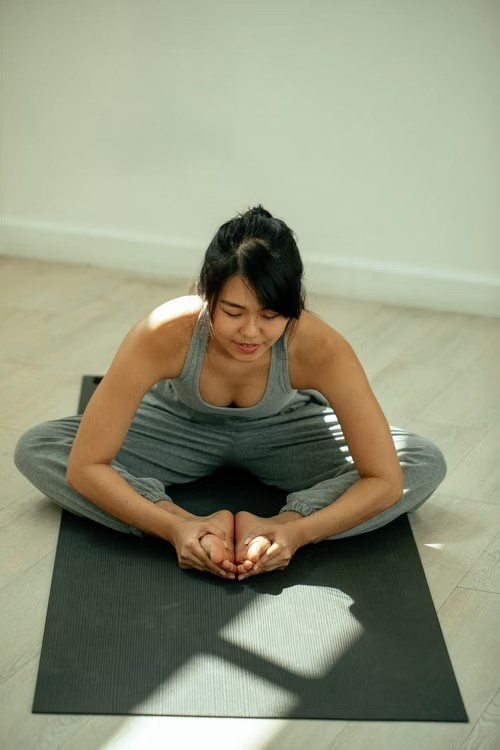
You sit down to meditate, close your eyes, and within a minute your knees ache, your back slumps, and your mind is busy writing tomorrow’s to-do list. Sound familiar? Most beginners assume they’re simply “bad at meditation.” In reality, the problem is very often the body, not the mind. If you can’t sit comfortably, you can’t sit still, and if you can’t sit still, it’s very hard to focus.
This is exactly why yoga exists. In traditional yoga, the physical postures (asanas) were developed largely to prepare the body for long periods of seated stillness. The right yoga poses for meditation give you a stable base, a tall spine, and a relaxed body, so your attention is free to settle on your breath instead of your discomfort.
In this guide, you’ll learn seven beginner-friendly postures, step-by-step instructions, who should be careful with each one, and a simple 10-minute routine you can start tonight. Stay until #5, because it solves a problem that most people blame on the wrong part of their body.
Table of Contents
Why Your Sitting Position Matters More Than You Think
Every good meditation seat has three qualities: a stable base, a tall, relaxed spine, and a body that isn’t fighting itself. When you slouch, your chest collapses, your breathing becomes shallow, and your body quietly sends a message of tension to your brain. When your hips are lower than your knees, your lower back rounds and starts to ache. When your legs fall asleep, your attention immediately jumps to the pins and needles.
A steady, comfortable posture does the opposite. It lets your breath move freely, keeps you alert without strain, and removes the small physical distractions that keep interrupting your focus.
Meditation is also worth the effort. The US National Center for Complementary and Integrative Health (NCCIH) notes that meditation may help with stress, anxiety, and sleep problems, although the research is still developing and results vary from person to person. The best practice is the one you can actually repeat, and comfort is what makes you repeat it.
Get Ready Before You Sit
A little preparation makes every pose in this guide easier:
- Warm up for 2 to 3 minutes. A few neck rolls, shoulder circles, and rounds of cat-cow loosen your spine and hips.
- Use props. A firm cushion, a folded blanket, or a yoga bolster lifts your hips above your knees, which is the single biggest comfort upgrade for most people.
- Time it well. Meditate on a relatively empty stomach, ideally a couple of hours after a big meal, and in a quiet spot with dim light.
Ready to try these yoga poses for meditation? Let’s start with the most beginner-friendly one.
1. Sukhasana (Easy Pose)
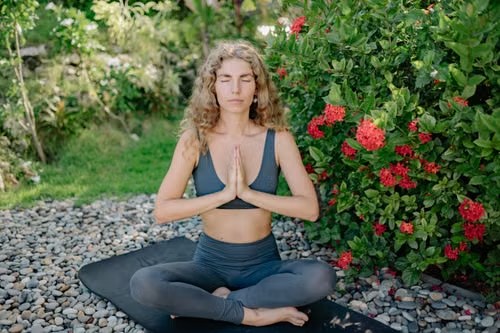
In Sanskrit, sukha means ease or comfort, and that’s the whole idea. Sukhasana is the classic cross-legged seat that most of us picture when we think of meditation. It’s simple, requires very little flexibility, and is a great starting point for almost everyone.
The secret to making it work is lifting your hips. If your knees sit higher than your hips, your pelvis tips backward and your spine rounds. Sitting on a cushion or folded blanket tilts the pelvis forward slightly and lets your back stack naturally.
How to do it:
- Sit on the front edge of a folded blanket or cushion with your legs stretched out in front of you.
- Cross your shins loosely, with each foot resting under the opposite knee. Your legs should feel relaxed, not squeezed.
- Lengthen your spine, imagine the crown of your head floating upward, and let your shoulders drop away from your ears.
- Rest your hands on your knees, palms up or down, and close your eyes or soften your gaze.
Tip: Switch which leg is in front each session so your hips develop evenly. If your knees feel strained, sit on a higher cushion or on a chair.
Also read:

0 Comments