7 Yoga Poses For Meditation
2. Vajrasana (Thunderbolt Pose)
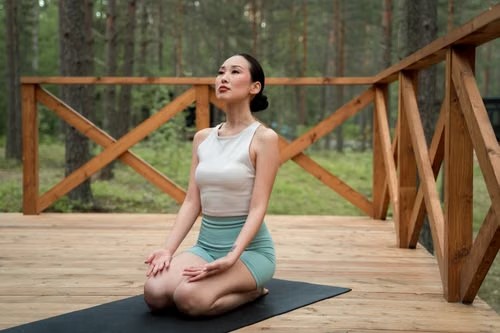
Vajrasana is a kneeling pose, where you sit on your heels with a straight back. Vajra means thunderbolt or diamond, which hints at the strength and steadiness of the posture. It’s a favorite in both yoga and meditation traditions across India, and it’s one of the few poses traditionally practiced right after a meal, which many people find supports comfortable digestion.
Because your legs are folded underneath you rather than crossed, Vajrasana is a good option if cross-legged sitting hurts your hips. It naturally keeps your spine upright and your chest open.
How to do it:
- Kneel on the floor with your knees together and your big toes touching or slightly overlapping.
- Slowly lower your hips back onto your heels.
- Keep your spine tall, your shoulders relaxed, and your hands resting on your thighs.
- Breathe slowly through your nose and let your gaze rest softly.
Be careful if: You have knee or ankle injuries. Place a folded blanket between your calves and thighs, or under your ankles, for padding. If your feet go numb, come out of the pose gently and stretch your legs.
3. Ardha Padmasana (Half Lotus Pose)
Padma means lotus, and the full lotus pose (both feet on opposite thighs) is the best-known meditation posture in the world. It’s also very demanding. Half lotus, where only one foot rests on the opposite thigh, gives you a similar, very stable base with far less demand on the hips.
What makes this pose steady is its wide, grounded shape, which makes it hard to slump. But it comes with an important safety rule: the knee is a hinge joint, and it does not like twisting. The movement in lotus should come from your hips, not your knees. If you feel any strain in the knee, back off immediately.
How to do it:
- Sit in Sukhasana on a raised cushion.
- Lift one foot and place it gently on top of the opposite thigh, as close to the hip crease as is comfortable. Let the other foot rest underneath the opposite knee.
- Let your top knee relax toward the floor. If it floats high, place a folded blanket underneath it for support.
- Sit tall and relax your shoulders. Switch legs the next time you sit.
Be careful if: You have tight hips or a history of knee problems. It’s perfectly fine to skip this pose. Many experienced meditators never use lotus at all.
0 Comments