7 Yoga Poses For Meditation
Table of Contents
6. Balasana (Child’s Pose)
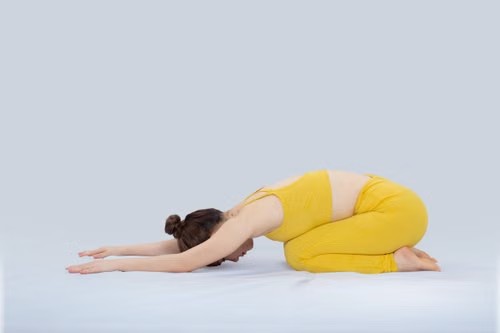
Bala means child, and this is one of the most soothing postures in all of yoga. It’s not a long-sitting meditation seat. Instead, think of it as a gentle bridge between the busy day and the stillness you’re about to practice. Folding forward and resting your forehead on the floor turns your attention inward and encourages slow, deep breathing.
Many people find it a lovely way to drop out of “go mode” in the minute or two before sitting. It also stretches the back, hips, and ankles, which can ease the stiffness that makes sitting harder.
How to do it:
- Kneel on the floor, bring your big toes together, and spread your knees about hip-width apart (or wider).
- Sit back toward your heels and fold forward, resting your forehead on the floor, a cushion, or a bolster.
- Stretch your arms out in front of you, or rest them alongside your body with the palms up.
- Stay for 1 to 3 minutes, breathing into your back and letting your shoulders soften.
Be careful if: You are pregnant (keep your knees wide and use a bolster), or you have knee injuries or recent knee surgery. Place a rolled blanket behind your knees to reduce the bend.
7. Savasana (Corpse Pose)
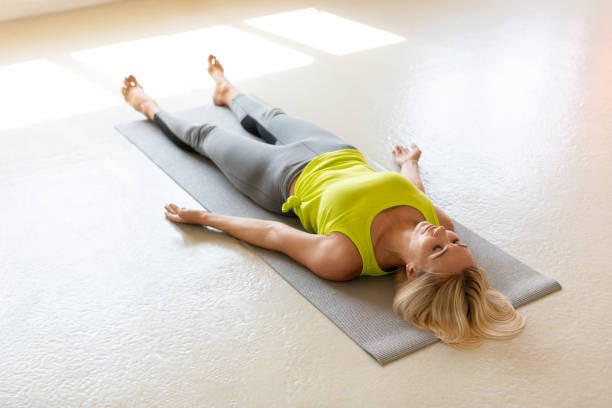
It may look like you’re just lying down, but Savasana is considered one of the most challenging poses, because it asks you to do something many of us never do: relax completely while staying awake. Sava means corpse, and it’s often the final pose of a yoga class, where the body absorbs the benefits of the practice.
It’s also a wonderful option for lying-down meditation, body-scan practices, and yoga nidra (“yogic sleep”). It’s particularly useful if you have back pain, sitting is uncomfortable, or you’re meditating at the end of a long day.
How to do it:
- Lie flat on your back with your legs about hip-width apart and your feet falling naturally outward.
- Rest your arms a little away from your body with the palms facing up.
- Close your eyes and take a few deep breaths, then let your breathing return to normal.
- Slowly scan your body from your feet to your head, softening each area as you go. Stay for 5 to 10 minutes.
Be careful if: You fall asleep easily. Try keeping your eyes slightly open, or meditate earlier in the day. If your lower back feels tight, place a pillow or bolster under your knees. If you’re pregnant beyond the first trimester, lie on your left side or semi-reclined, and ask your doctor what’s best for you.
A Simple 10-Minute Routine to Try Tonight
You don’t need to do all seven at once. Pick 3 or 4 of these yoga poses for meditation and combine them like this:
- Minutes 1 to 2: Balasana. Fold forward, breathe slowly, and let the day fall away.
- Minutes 3 to 4: Baddha Konasana. Open your hips and inner thighs so your seat feels more comfortable.
- Minutes 5 to 8: Sukhasana or Vajrasana. Sit tall on your cushion and follow your breath. When your mind wanders, gently bring it back, without judging yourself.
- Minutes 9 to 10: Savasana. Lie down, relax every muscle, and notice how you feel.
5 Common Mistakes to Avoid
- Sitting without a cushion. Lifting your hips solves most comfort problems at once.
- Forcing lotus. Pushing your knees into a position your hips can’t handle risks injury. Easy beats impressive.
- Slouching and then blaming your mind. Reset your posture, lift your chest, and relax your shoulders before you start.
- Expecting a silent mind. Meditation isn’t about stopping your thoughts. It’s about noticing them and returning to your breath, again and again.
- Doing too much too soon. Start with 3 to 5 minutes and slowly work up. Consistency matters far more than length.
Frequently Asked Questions
What are the best yoga poses for meditation for beginners?
Sukhasana (Easy Pose) and Vajrasana (Thunderbolt Pose) are the easiest to start with, as long as you sit on a cushion or folded blanket. Add Baddha Konasana and Balasana as warm-ups to make sitting more comfortable.
Do I need to sit in lotus pose to meditate?
No. Lotus is a traditional posture, but it’s not required, and it isn’t suitable for everybody. A comfortable, stable, upright seat, even on a chair, works just as well.
How long should I hold each pose?
For warm-up poses like Child’s Pose and Bound Angle Pose, 1 to 3 minutes is enough. For seated meditation, start with 3 to 5 minutes and gradually build up to 10 to 20 minutes as your body and focus adapt.
Can I meditate lying down?
Yes. Savasana is a well-established lying-down posture, and it’s helpful for body scans and yoga nidra. Just be aware that it’s easier to fall asleep, so if staying awake is your goal, a seated pose may be better.
What is the best time to meditate?
The best time is the one you’ll stick to. Many people like early mornings for a clear mind, or evenings to unwind. Try to practice at about the same time each day to build the habit.
The Bottom Line
Meditation doesn’t have to feel like a struggle against your own body. The best yoga poses for meditation are simply the ones you can hold comfortably, with a tall spine, relaxed shoulders, and steady breathing. Start with a cushion, choose one or two postures that suit you, and practice for just a few minutes a day.
In a few weeks, you may find that sitting still gets easier, your focus gets steadier, and that restless mind starts to quiet down. Be patient with yourself. Every minute you spend sitting, even a messy, distracted one, counts.
This article is for general information only and is not a substitute for professional medical advice. Please consult a qualified healthcare professional or certified yoga teacher for personal guidance.
0 Comments